
Drywood Termites in Singapore: How to Identify and Treat an Infestation
Drywood termites (family Kalotermitidae) are found across Singapore in landed homes, HDB flats, condominiums, and commercial properties. Unlike subterranean termites, drywood termites live entirely inside the wood they consume. They do not build mud tubes, do not require soil contact, and leave very little visible evidence until a colony is well established. This makes them one of the most difficult termite species to detect early. Drywood termites (family Kalotermitidae) are found across Singapore in landed homes, HDB flats, condominiums, and commercial properties. Unlike subterranean termites, drywood termites live entirely inside the wood they consume. They do not build mud tubes, do not require soil contact, and leave very little visible evidence until a colony is well established. This makes them one of the most difficult termite species to detect early.
drywood termite treatment singapore
.Drywood termites belong to the family Kalotermitidae. They are the second most structurally damaging termite group in Singapore after subterranean termites. The key biological difference is that drywood termites extract all the moisture they need directly from the wood they consume. This allows them to survive and thrive in dry, dead timber with no soil connection required.
A drywood termite colony is typically smaller than a subterranean colony, often a few hundred to a few thousand individuals rather than hundreds of thousands. However, a single piece of wood can harbour multiple separate colonies, and infested furniture or building materials can transport colonies between properties.
Drywood Termites vs Subterranean Termites: Key Differences
| Feature | Drywood Termites | Subterranean Termites |
|---|---|---|
| Soil contact required | No. Live entirely within the wood. | Yes. Must maintain connection with soil for moisture. |
| Mud tubes | Not present. | Always present. Primary detection sign. |
| Colony size | Small: hundreds to a few thousand. | Large: tens of thousands to millions. |
| Primary sign | Hexagonal frass pellets near wood surfaces. | Mud tubes on walls, floors, or pipes. |
| Infestation speed | Slower. Damage accumulates over years. | Faster. Can destroy structural timber quickly. |
| Where found in SG homes | Furniture, door frames, skirting, parquet, roof timber. | Below-ground structures, slab edges, pipes, foundations. |
| Treatment approach | Spot treatment, spraying, or foaming of affected wood. | Baiting systems, soil treatment, or corrective treatment. |
| Baiting effective? | No. They do not forage through soil. | Yes. Baiting targets soil-foraging worker termites. |
6 Signs of Drywood Termites in Your Singapore Home
Drywood termites are difficult to detect because they live inside the wood and rarely come to the surface. These are the six most reliable indicators of an active infestation.
1. Drywood Termite Frass (Droppings)
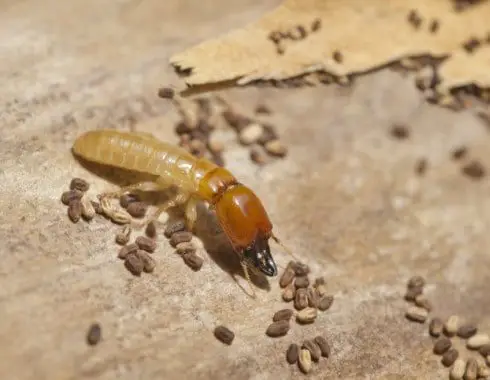
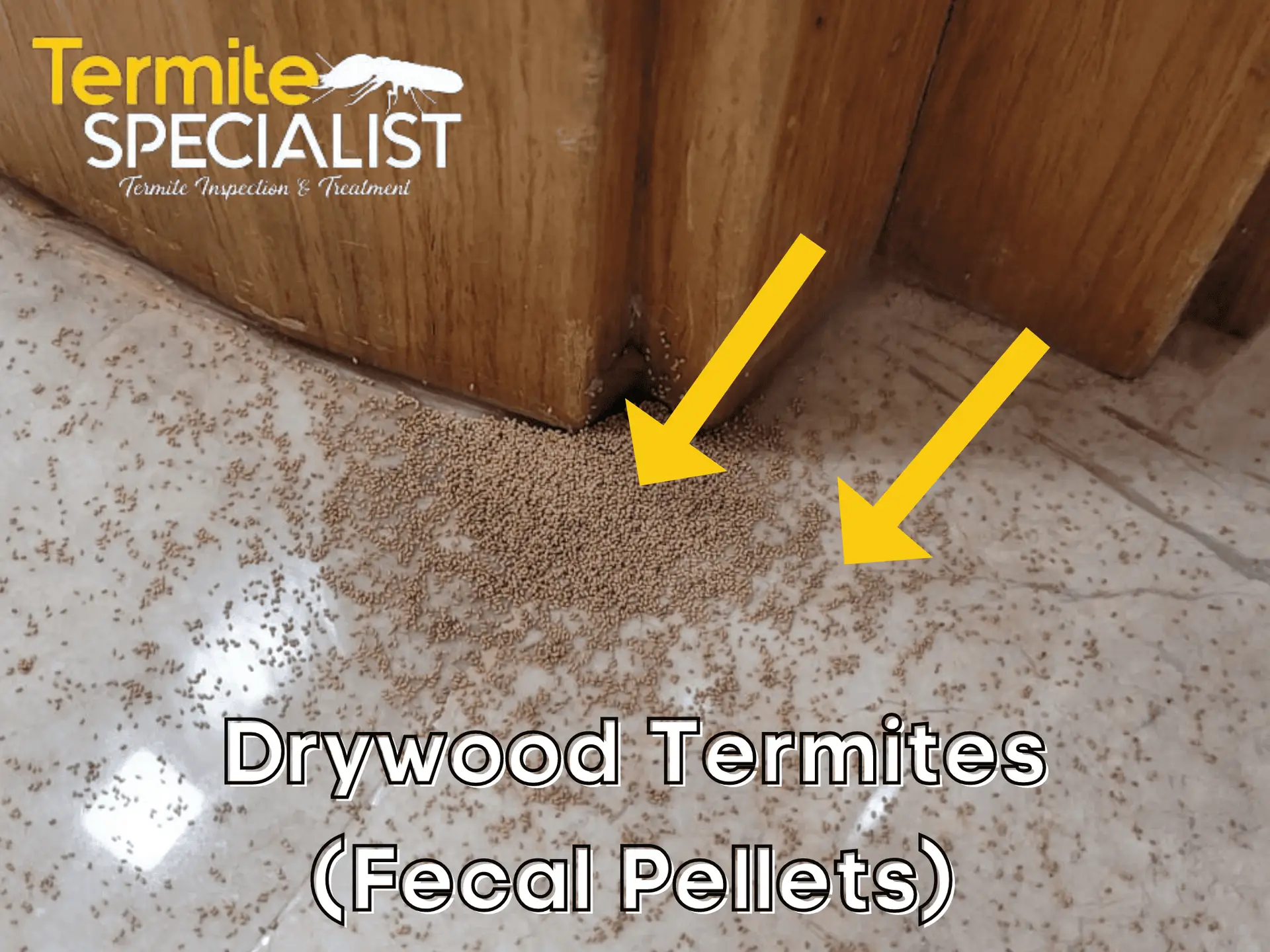
Drywood termite frass is the most distinctive sign of an infestation. The pellets are tiny (approximately 1 mm long), oval, and have six flattened or concave sides giving them a hexagonal cross-section. They are typically the colour of the wood being consumed: ranging from pale cream to dark brown.
Drywood termites push frass out of the wood through small exit holes called kick-out holes. The pellets accumulate in small piles below the exit hole. Common locations in Singapore homes include:
- Below built-in wardrobes and cabinets
- On the floor along door frames and wood skirting
- On window sills or furniture surfaces directly below a timber joint
- On parquet flooring, particularly near panel edges
Frass is sometimes mistaken for fine sawdust. The difference is shape: sawdust is irregular, while drywood termite frass pellets are uniform and hexagonal under magnification.
2. Small Kick-Out Holes in Timber
Drywood termites create small, circular or oval holes (typically 1 to 2 mm in diameter) in the surface of infested timber to push out frass. These holes are often sealed and reopened repeatedly. If you see a small hole in a door frame, skirting board, or cabinet panel with fine pellets below it, this is a strong indicator of active drywood termites.
3. Hollow-Sounding Wood
As drywood termites excavate galleries inside timber, they hollow out the interior while leaving a thin outer shell intact. Knocking on infested wood produces a hollow, papery sound rather than a solid thud. If you notice this in built-in carpentry, wooden skirting, or door frames in your home, arrange a professional inspection promptly.
4. Discarded Wings Near Windows or Light Fixtures
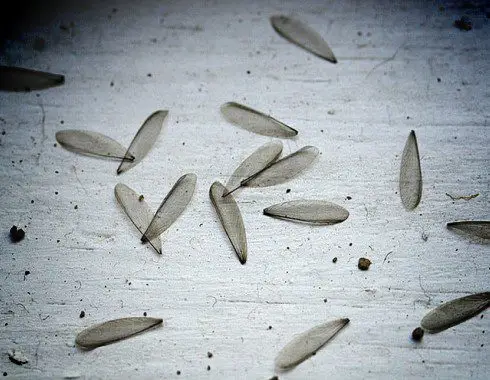
During swarming season, reproductive drywood termites (alates or swarmers) leave established colonies to mate and start new ones. After landing, they twist off their wings. Small piles of discarded wings near window sills, door frames, or indoor light sources indicate that swarmers have recently been in the area.
Drywood termite swarmers are often confused with flying ants. The key difference: termite swarmers have equal-length wings, a straight antenna, and a broad waist. Flying ants have unequal wings, bent antennae, and a narrow pinched waist.
5. Swarmers (Flying Termites) Found Indoors
If you see winged termites inside a room — near lights, on window sills, or flying around in the evening — this typically means an established colony is nearby. Drywood termite swarmers are attracted to light and are most commonly seen at dusk or in the early evening. Finding several swarmers indoors on multiple occasions is an urgent indicator that a professional inspection should be arranged. For help identifying swarmers, see our guide to flying termites in Singapore.
6. Visible Structural Damage to Carpentry
In advanced infestations, drywood termites cause visible structural damage: blistering or bubbling paint on timber surfaces, warped or misaligned door frames, crumbling edges on skirting boards, and weakened or sagging wooden panels. By the time damage is visually obvious, a colony has typically been established for one to several years. Treatment at this stage is still effective but often requires more extensive work.
How Drywood Termites Spread
Unlike subterranean termites, which spread through underground foraging tunnels, drywood termites spread primarily through swarming. During swarming season in Singapore — typically triggered by warm, humid weather, often from March to May and again from September to November — winged alates leave established colonies, fly, and attempt to found new colonies in suitable timber.
A second common route is through infested timber and furniture. Renovation waste, secondhand furniture, imported timber products, and building materials can all carry drywood termite colonies.
Swarming Season and New Colony Formation
After a swarming flight, a male and female alate pair land, shed their wings, find a crack or crevice in a suitable piece of timber — a joint in a door frame, a knothole in a skirting board, or a gap in a cabinet panel — and seal themselves inside to begin a new colony. Eggs take several months to hatch. The colony grows slowly; the first external signs of an infestation (frass, kick-out holes) may not appear for 12 to 24 months after a new colony is established.
This is why early detection through a professional termite inspection in Singapore is more effective than waiting for obvious signs to appear.
Drywood Termite Treatment Options in Singapore
Drywood termites live inside the wood. Treatment must penetrate the wood or reach the colony within it. Three main methods are used by professional pest control companies in Singapore.
Spot Treatment (Oil-Based Termiticide Injection)
Spot treatment is the most targeted approach for drywood termites. A licensed technician drills small holes into the infested timber and injects an oil-based termiticide directly into the galleries where the colony lives. The chemical spreads through the colony’s network of tunnels and makes contact with workers, soldiers, and reproductives.
Drilling is required for this method. Termite Specialist Pte Ltd will request your permission before any drilling is carried out. The holes are typically 4 to 6 mm and are sealed after treatment. Spot treatment is most effective when the infestation is localised and the affected timber can be accurately identified.
Residual Spraying (Water-Based Termiticide)
Water-based residual termiticide can be applied to the surface of infested or at-risk timber. The chemical penetrates into the wood and provides a residual barrier against termites within the treated material. This method is used for accessible surfaces such as skirting boards, exposed door frames, and accessible cabinet interiors.
Residual spraying is often used in combination with spot treatment: injection targets the active colony while surface spraying protects adjacent timber from spread.
Foaming Treatment
Foaming involves injecting a termiticide foam into cavities within the wood structure. The foam expands to fill irregular spaces, reaching areas that liquid injection might not penetrate fully. It is particularly useful for hollow timber sections, wall cavities adjacent to infested panels, and areas where drilling access is limited. The foam is low-residue after drying and does not damage finished surfaces when applied correctly.
Why Termite Baiting Does Not Work for Drywood Termites
Termite baiting treatment in-ground stations or above-ground bait stations — is designed specifically for subterranean termites. Subterranean termites forage through soil tunnels and encounter bait stations placed at strategic locations around a building. Workers carry bait back to the colony, spreading the slow-acting insecticide to the queen and soldiers.
Drywood termites do not forage through soil. They do not leave the wood they inhabit to search for food. As a result, they will never encounter a bait station and baiting has no effect on drywood termite colonies. The correct treatment methods for drywood termites are spot treatment, residual spraying, and foaming.
When to Call a Professional Drywood Termite Specialist
Do not spray over-the-counter insecticide on suspected drywood termites. Aerosol sprays kill surface insects but do not penetrate wood or reach the colony inside.
Call us at +65 6910 3776 or visit our termite inspection page to arrange an assessment. We serve all areas in Singapore including HDB estates, condominiums, landed homes, shophouses, and commercial properties.
For comprehensive termite control in Singapore, contact Termite Specialist Pte Ltd today

- Found Signs of Drywood Termites? Call +65 6910 3776
warning Signs Of Drywood Termites
Your Termite Control In Singapore
if you see any signs of drywood termites as per image below, please do not spray any insecticide and call us immediately for termite inspections @+65 93621956.
Watch: Real Drywood Termite Infestation
Frequently Asked Questions
Drywood termite frass consists of tiny oval pellets approximately 1 mm long with a hexagonal cross-section (six flattened or concave sides). They are the colour of the consumed wood, ranging from cream to dark brown. They appear in small piles below kick-out holes near door frames, skirting boards, cabinets, or parquet flooring. Unlike irregular sawdust, drywood termite frass pellets have a consistent, structured shape.
Yes. Drywood termites do not require soil contact and can establish colonies in any dry timber regardless of building type. In HDB flats, common infestation sites include built-in wardrobes, kitchen cabinets, door frames, and solid wood furniture. They can also enter via infested secondhand furniture brought into the unit.
The two main entry routes are swarming and infested material. During swarming season, winged alates enter through gaps around door frames, window screens, or any opening near timber. They can also enter through infested secondhand furniture, renovation timber waste, or new solid wood furniture that was not properly inspected before delivery.
DIY surface sprays and aerosol insecticides available in Singapore do not penetrate wood and cannot reach a drywood termite colony living inside timber. They may kill individual insects on the surface but will not address the infestation. Professional treatment involving injection, foaming, or residual application inside the timber is required to reach and eliminate the colony effectively.
A professional drywood termite treatment session typically takes 2 to 4 hours depending on the size of the affected area and number of infestation points. A follow-up inspection is typically scheduled 4 to 8 weeks after treatment to confirm results. Unlike subterranean termite baiting which requires weeks of follow-up visits, a single spot treatment session can address active drywood colonies if the infestation is correctly identified.